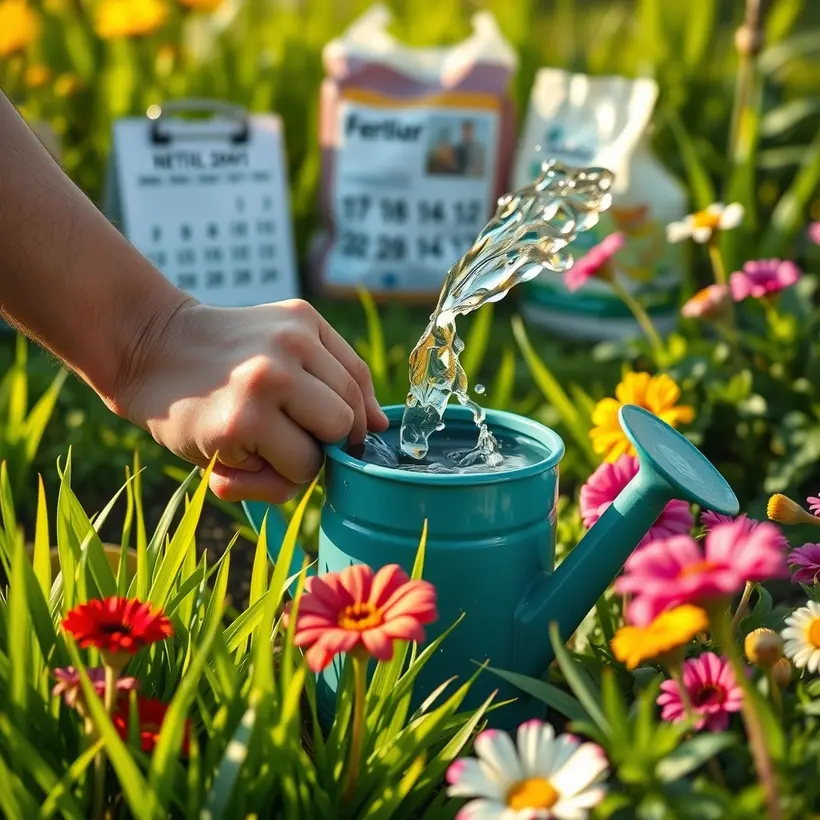
When should I fertilize and how often should I water?Fertilizing and watering schedules vary depending on your location and climate.
For fertilizing, it's best to follow a seasonal schedule:
- Spring: Apply a balanced fertilizer (e.g., 10-10-10 NPK) in early spring when grass starts growing.
- Summer: Apply a high-phosphorus fertilizer (e.g., 10-20-10 NPK) to promote healthy growth.
- Fall: Apply a balanced fertilizer to prepare your lawn for winter.
As for watering, consider the following:
- Water your lawn deeply once or twice a week, depending on weather conditions.
- Aim for 1-2 inches of water per week, either from rainfall or irrigation.
- Avoid frequent shallow watering, which can lead to shallow root growth.
To get specific advice tailored to your lawn, I recommend filling out the "Request a specialist" form on this page. A lawn care expert can assess your lawn's needs and provide personalized guidance. What type of grass do you have in your lawn?
Why is my lawn turning brown in patches?A brown lawn can be unsightly. There are several reasons why your lawn might be turning brown in patches. Here are a few possibilities:
1. **Drought**: If your lawn hasn't been getting enough water, it may be turning brown.
2. **Overwatering**: On the other hand, too much water can also cause brown patches.
3. **Pests**: Lawn pests like chinch bugs, white grubs, or billbugs can cause brown spots.
4. **Diseases**: Fungal diseases like powdery mildew or rust can also cause brown patches.
5. **Soil issues**: Poor soil quality or compacted soil can prevent water and air from reaching the roots.
To determine the cause, I'd recommend taking a closer look at your lawn and checking for signs of pests or diseases. If you're still unsure, you can **Request a specialist** from our network to assess your lawn and provide a more detailed diagnosis.
Next step: Would you like to provide more information about your lawn, such as its type, age, and watering schedule?
What does professional lawn care cost per month?Professional lawn care costs can vary depending on your location, lawn size, and services needed. Here are some general estimates:
* Basic lawn mowing and trimming: $30-$75 per visit (every 7-10 days)
* Fertilization and weed control: $50-$150 per application (every 4-6 weeks)
* Lawn aeration and dethatching: $100-$300 per visit (every 6-12 months)
* Full-service lawn care (mowing, trimming, fertilization, etc.): $100-$300 per month
Keep in mind that these are general estimates, and actual costs may vary depending on your specific needs and location.
To get a more accurate quote, I recommend using the "Request a specialist" form on this page to connect with a local lawn care professional who can assess your lawn and provide a customized estimate.
What type of lawn care services are you looking for?